
 Verified
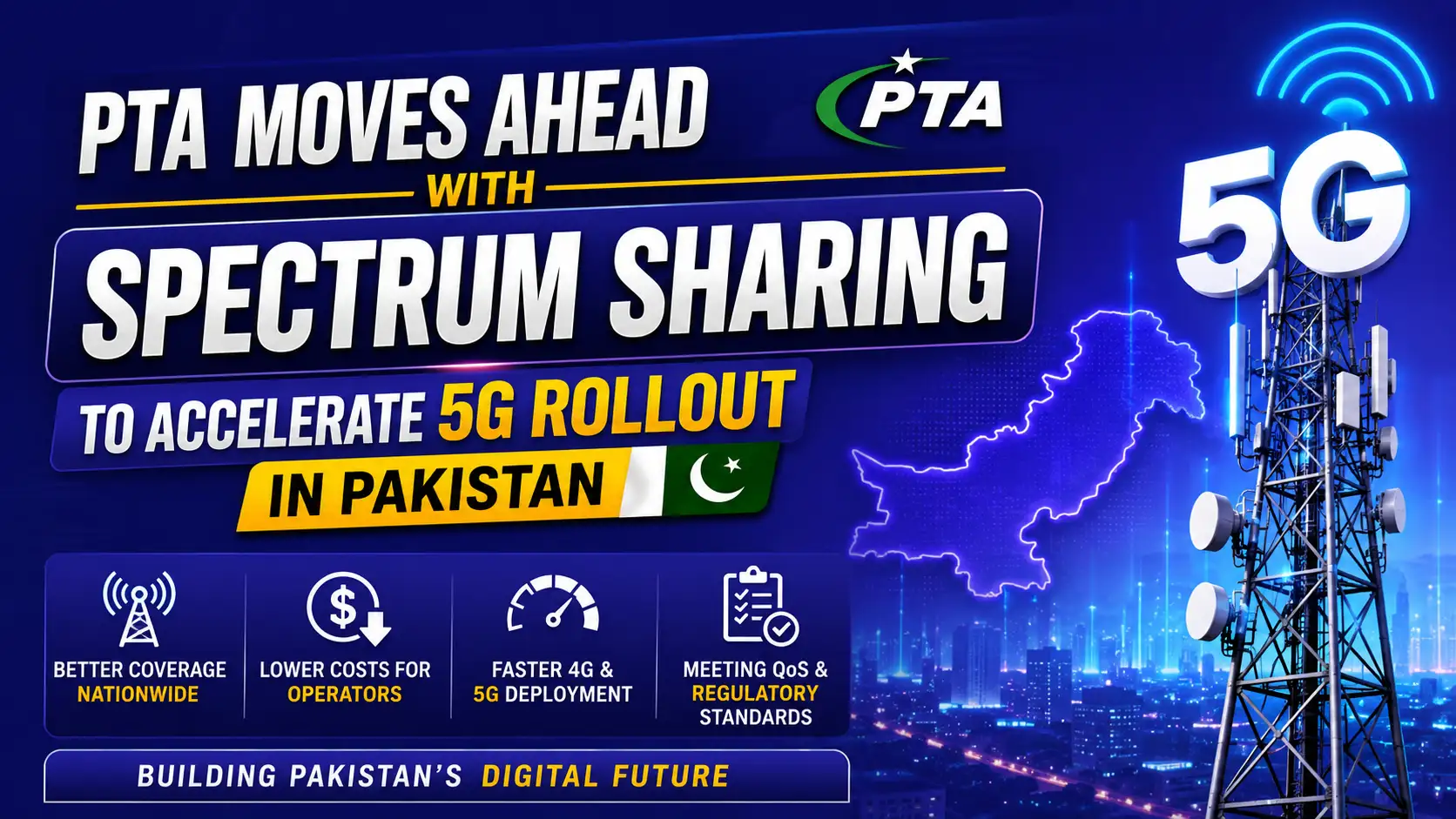
Pakistan’s telecom sector is moving another step closer toward faster 4G and 5G expansion as the Pakistan Telecommunication Authority (PTA) has officially forwarded its proposed Spectrum Sharing Framework to the Ministry of IT and Telecom for approval.
The framework was prepared under the Telecom Policy 2015 and is designed to help telecom operators use available spectrum more efficiently while reducing network deployment costs across the country.
According to PTA, the new policy could play an important role in speeding up Pakistan’s digital infrastructure growth and future 5G connectivity.
What Is Spectrum Sharing?
Spectrum sharing allows telecom companies to jointly use specific mobile frequency bands instead of building completely separate spectrum resources for every operator.

The proposed framework covers several major frequency bands including:
- 700 MHz
- 850 MHz
- 900 MHz
- 1800 MHz
- 2100 MHz
- 2300 MHz
- 2600 MHz
- 3500 MHz
These frequency bands are commonly used for:
- 4G LTE networks
- future 5G services
- high-speed mobile internet
- telecom infrastructure expansion
PTA believes this approach can improve spectrum utilization while helping operators expand coverage more quickly.
PTA Wants Faster 4G and 5G Deployment
One of the biggest goals behind the framework is to support faster nationwide deployment of advanced telecom services.
Instead of investing separately in every area, telecom operators may be able to:
- reduce infrastructure duplication
- lower operational costs
- improve rural coverage
- accelerate 5G rollout timelines
The authority has also clarified that telecom companies will still need to meet existing:
- Quality of Service (QoS) standards
- rollout obligations
- regulatory requirements
even after spectrum sharing is introduced.
Pakistan Expanding Digital Infrastructure
The spectrum-sharing proposal comes at a time when Pakistan is actively working to strengthen its overall telecom ecosystem.
Recently, PTA also introduced the Wireless Local Area Network (WLAN) Framework 2024, which opened the 6 GHz band for unlicensed use to support modern wireless technologies like:
- Wi-Fi 6E
- Wi-Fi 7
- next-generation connectivity systems
Industry experts believe these developments are necessary for supporting future:
- smart cities
- AI-powered services
- cloud applications
- high-speed digital networks
New Internet Service Licenses Introduced
PTA has also started issuing District Level Class Licenses for internet services from January 2026.
These licenses:
- remain valid for 10 years
- apply to one district per entity
- aim to encourage local internet businesses and entrepreneurship
The licensing model includes:

- Rs. 20,000 application fee
- Rs. 300,000 initial license fee
The move is expected to improve internet penetration in underserved regions of Pakistan.
Government Reduces Barriers for Telecom Expansion
To support telecom infrastructure growth, federal and provincial authorities have also started reducing or eliminating Right of Way (ROW) charges.
Several institutions and provincial governments, including:
- Punjab
- Sindh
- Balochistan
have introduced measures to lower these charges in order to encourage:
- fiber optic expansion
- tower installations
- digital infrastructure investment
However, some regulatory matters related to cantonment areas are still under discussion between relevant government departments.

Telecom Sector Preparing for Pakistan’s 5G Future
Pakistan’s telecom industry is currently preparing for the transition toward broader 5G adoption. Major operators including:
- Jazz
- Zong
- Ufone
- Telenor
continue upgrading their infrastructure as demand for faster mobile internet and digital services increases.
Industry analysts believe spectrum sharing could become one of the key steps in improving:
- nationwide connectivity
- telecom efficiency
- 5G readiness
- digital accessibility
over the next few years.
Categories
 Verified Author
Join The 5G Community
Get exclusive updates, device reviews, and expert insights directly from Pakistan’s 5G ecosystem.